Breakdown Reporting System
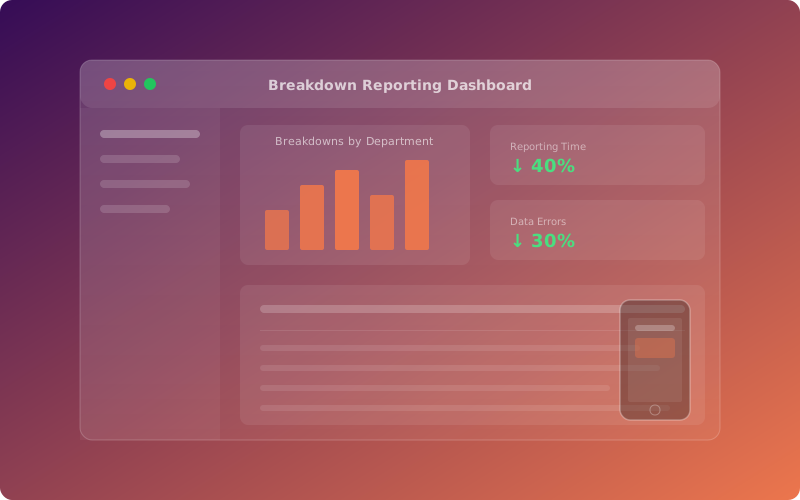
Designed and deployed a full-stack system using React Native, React.js, Node.js, Express, and MySQL, reducing manual reporting time by 40%. Built REST APIs handling daily operational data for multiple departments with stable performance.
Problem
Equipment breakdowns across multiple departments were being reported manually — through phone calls, spreadsheets, and paper forms. This caused significant delays, data loss, and zero real-time visibility into failure patterns. Maintenance teams had no way to prioritise urgent repairs, and management spent hours compiling weekly breakdown reports from scattered sources.
Solution
Built a full-stack breakdown reporting system with a React Native mobile app for field workers to log breakdowns in real time and a React.js web dashboard for managers to monitor, filter, and analyse reports across departments. The system includes automated notifications, departmental breakdowns, and historical trend tracking.
Tech & Decisions
Chose React Native for the mobile app to enable cross-platform deployment from a single codebase, critical for teams using both Android and iOS. React.js powers the web dashboard for dynamic filtering and real-time data display without page reloads. Node.js with Express handles the REST API layer, chosen for its non-blocking I/O suited to handling concurrent field reports. MySQL was selected for relational data integrity — breakdowns relate to departments, equipment types, and time-series data requiring structured queries.
My Role & Actions
Solely responsible for the entire system architecture — designed the database schema with normalised tables for equipment, departments, and breakdown events. Built and documented REST APIs handling hundreds of daily records. Developed the mobile UI with offline-capable form submission and the web dashboard with role-based views. Implemented automated validation checks that run daily to catch data quality issues before they reach reports.
Results & Impact
Reduced manual reporting time by approximately 40%. Cut data errors by 30% through automated validation and structured digital capture. Improved data collection efficiency by 15% with scheduled capture workflows. Shortened project initiation timelines by 20% by translating reporting requirements into ready-to-use solutions. Maintained 90%+ first-contact resolution rate for technical issues, improving system uptime by 20%.
Key Highlights
- Designed and deployed across web and mobile platforms
- Built REST APIs handling hundreds of records daily
- Improved data collection efficiency by 15%
- Resolved 90%+ of technical issues without escalation
- Optimised SharePoint data storage and access controls